
“AI Development is a very divisive hot topic – right through the IT industry.
While it has definite advantages, it also comes with serious risks”
~ Lourens Botha, 2026
Cloud Applications – The Shift toward Accessible Customisation
For years, custom-built software was the exclusive domain of large corporations with massive budgets. The rest of the business world had to “make do” with generic tools or fragmented spreadsheets. AI has changed that – not by replacing the developer, but by removing the manual drudgery of the build and radically shortening the development cycle. (Click to read more)
AI acts as a high-speed co-pilot. It handles the repetitive syntax, identifies bugs in real-time and optimizes database structures. This allows us to focus on the business logic rather than the “plumbing” of the code.
What this means for your business: The barrier to having a system that actually matches your workflow has dropped. Custom Cloud Applications are no longer a “Fortune 500” luxury. They are now an affordable, faster and higher-quality way for an SME to optimise their business processes and reduce operational costs.
The AI Advantage: Compressed Timelines and Expert Oversight
The impact of AI on software development isn’t just incremental, it’s exponential. It redefines what’s possible in terms of speed, team structure and cost. (Click to read more)
Faster Implementation Cycles
AI-assisted development can reduce the time from a concept to a functional prototype by 30-70%. Tasks that previously required days of manual coding are now accomplished in hours. This doesn’t just save money – it means your business can adapt to market changes or new regulations in weeks, not months.
| Metric | Traditional Development | AI-Assisted Development |
|---|---|---|
| Initial Prototype | Weeks to Months | Days to Weeks |
| Core Feature Build | Months | Weeks |
| Iteration & Testing | Slow, manual bug-hunting | Faster, with AI-assisted debugging |
The Lean, Architect-Led Model
We’ve moved past the need for massive development teams and the corporate bureaucracy that comes with them. A single Senior Systems Architect, someone who understands business processes and long-term strategy, can now leverage AI to do the work of a traditional coding team.
Note: While there are future issues with this development model regarding the next generation of systems architects, that is something the industry would need to find solutions for in the next 5-10 years. For now there are enough senior architects around.
This lean structure means:
- Drastically Reduced Overheads: You aren’t paying for a large payroll or layers of management.
- Architectural Integrity: You work directly with the person designing the logic. There is no “translation loss” between the business owner and the developer.
- Standardized Quality: AI helps enforce clean, industry-standard code, making the application easier to maintain and scale.
“LLM’s have forced a new job type on us: ‘Prompt engineering’ – the new sought after skill”
~ Lourens Botha, 2026
The Critical Difference:
Architect-Directed vs. “Vibe”-Driven Development
The arrival of AI has lowered the barrier to entry for software creation, but it has also introduced a hidden danger for businesses: the rise of “vibe”-driven development. Understanding the difference between this and a professional, architect-led approach is crucial to the success of your project. (Click to read more)
The “Viber” (The Risk of Technical Debt)
A “Viber” is a developer who uses AI as a crutch. They prompt the AI to generate code that looks functional on the surface but lacks an underlying blueprint. They are building on a “vibe” – a surface-level understanding of the goal.
This approach creates a “House of Cards.” It works during a demo, but it fails under the weight of real-world data because the invisible structures, security, scalability and data integrity, were never designed. This leads to massive “Technical Debt” that eventually costs more to fix than the original build.
The Architect (The Foundation)
At GTW Software Technologies (GrabTheWeb), the process is strategy-first. Before a single line of code is generated, we:
- Map the business model and processes to identify the real-world choke points.
- Design a logical, secure and scalable database structure.
- Create an architectural plan that ensures every component fits together.
Only then is the AI directed to execute the plan brick by brick. The architect’s expertise governs the AI, ensuring the final product is a robust business asset, not a temporary fix.
Solving Old Problems, Managing New Risks
Solving the “Legacy” Developer Problems: The architect-led model discussed above, solves two of the most persistent – and expensive – problems in traditional software development. (Click to read more)
Solving the “Legacy” Developer Problems
This architect-led model also solves two of the most persistent problems in traditional software development:
- The “Maverick Genius”: A developer who produces great code but so complex and (probably) undocumented, that no one else can maintain it. They create a dangerous single point of failure for your business.
- The “Code Hacker”: A developer who strings an application together using disjointed protocols and “band-aid” fixes. It looks good on top but is rotten underneath – unstable, insecure, and eventually, unusable.
Proper direction of AI prevents these issues from the start. It enforces a standardized, best-practice approach. Think of AI as a top-grade developer with near-infinite experience, but one that is only effective when orchestrated by a strategic architect who ensures every piece supports a single, coherent vision.
Managing the “Context” Trap (The 2026 Reality)
While we describe AI as a “top-grade developer,” there is a catch: It suffers from chronic short-term memory loss.
The biggest management issue for an architect is the LLM’s inherent lack of context. With full context, these models are brilliant. With bad or incomplete context, the output is not just suspect—it is dangerous for the application and the business. This is where the Senior Architect role is critical. It is not just about “feeding” the AI – it is about continuously evaluating the output against decades of acquired business logic and systems building.
“Context” is the single biggest danger for the Vibe-coder. If you don’t know how the system must work, you won’t realize when the AI is hallucinating a shortcut that will break your data later or simply start side-tracking itself.
At a Glance: The Two Approaches
| Aspect | The “Viber” (High Risk) | The Architect (Professional) |
|---|---|---|
| Foundation | No blueprint; code is “stitched together.” | Starts with a detailed architectural plan. |
| Data Structure | Disorganized, inefficient, and insecure. | Logical, scalable, and secure by design. |
| Process | Asks “What should it look like?” | Asks “How must it work, now and in the future?” |
| Tool Usage | Lets the AI lead. | Directs the AI to execute a specific task. |
| Context Management | Little understanding of complex systems. | Identifies logical flaws the moment they occur. |
| The Outcome | A fragile app that is expensive to fix. | A robust asset that grows with your business. |
The choice is clear. The most exciting promise of AI is not that anyone can build an app, but that an expert can now build a world-class app for you with unprecedented efficiency and value.
“AI models all have a character flaw- they forget stuff quickly and will not tell you they did.
Then they just hallucinate content/context to fill the gaps”
~ Lourens Botha, 2026
Negotiating the “Bus-factor”: The Standardized Stack
To ensure long-term stability and eliminate business risk, GrabTheWeb operates on a strict policy of zero deviation from industry-standard frameworks. Every application we build is anchored on a standard Laravel and Vite/Vue 3 stack. (Click to read more)
We do not experiment with the “flavor of the month” tech stacks. This disciplined approach provides three massive advantages for your business:
No Developer Lock-in: Because we use the absolute standard way of building Laravel applications, any competent Laravel developer in South Africa or globally can step in, read the code and take over. You are never held hostage by a “Maverick Genius” or a custom, undocumented framework.
Predictable AI Output: LLMs are at their best when they have fixed, standard references to follow. By keeping our environment 100% predictable, we minimize AI hallucinations. The AI knows exactly what the structural rules are, which drastically increases build speed and code quality.
Deep Architectural Mastery: By focusing exclusively on this one environment, we have developed a sensory instinct for it. We don’t need to waste time learning new, unproven frameworks. It improves our quality control and we redirect if something deviates from our pragmatic, high-performance standards.
Choosing the Right Engine for an SME
For decades, the ASP.NET stack was the “Standard” for South African corporate applications. But for an agile SME or professional firm, the world has changed. We chose the **Laravel/Vite/Vue** stack because it prioritizes business agility over corporate bureaucracy. (Click to read more)
Comparison between the ASP.Net backbone and Laravel/Vite/Vue:
| Feature | The Corporate Standard (ASP.NET) | The GrabTheWeb Way (Laravel/Vite/Vue) |
|---|---|---|
| Development Speed | Boilerplate-heavy, often takes longer to get to a “functional” state. | High-velocity; built specifically for rapid, clean web application development. |
| Licensing Costs | Often tied to Microsoft licensing (SQL Server, Windows Server, etc.). | Open Source. Zero licensing fees. You pay for the work, not the permission to run it. |
| Hosting & Ops | Usually requires more expensive, Windows-centric or high-tier Azure environments. | Universal & Efficient. Runs on any standard Linux/Cloud environment (AWS, Digital Ocean, most hosting providers). |
| Developer Pool | Large, but often dominated by high-cost enterprise consultancies. | Massive, modern and agile. Thousands of South African developers know this stack. |
| AI Compatibility | Strong, but can be rigid in its architectural requirements. | LLM-Optimal. The standardized nature of Laravel makes AI-assisted coding incredibly accurate. |
| The “Handover” | Often requires a specific “Microsoft Partner” to maintain or change. | Zero Lock-in. Any competent Laravel developer can step in and understand the code instantly. |
Your Business should not be a “Tenant” of a Foreign Vendor.
In South Africa, we are learning that “Global” often means “Conditional.” Relying on US-controlled proprietary stacks isn’t just a technical choice – it’s a strategic risk. We build on an Open Source foundation and host locally to ensure your business remains under your control, no matter what happens internationally. (Click to read more)
The Strategic Logic of Local Hosting and Open Source:
Access Insurance: By using Open Source (Laravel/Linux/PostgreSQL), we own the engine. There is no foreign “kill switch.” If a US-based vendor decides to change their regional policy or pull a product from the market, our applications continue to run because we own the code.
Currency Stability (ZAR vs. USD): Paying for software and hosting in US Dollars is a gamble against the Rand. We host locally with partners like Domains.co.za and Teraco. This ensures our operational costs are in Rands, making your budget predictable and immune to exchange rate volatility.
Data Sovereignty & POPIA: Hosting your data at Teraco (Africa’s largest vendor-neutral data centre) means your client data never leaves South African soil. This isn’t just about speed – it’s about absolute compliance with POPIA and ensuring that your data is governed by South African law, not foreign policy.
Performance (Latency): For a South African professional, every millisecond matters. By hosting at the heart of the South African internet (Teraco), your “Production Files” move at local speeds, not at the mercy of international undersea cable stability.
| Feature | The US-Dependent Way (SaaS/Azure) | The GrabTheWeb Way (Local/Open) |
|---|---|---|
| Control | You are a tenant – they own the “land”. | You are the owner – you own the “engine”. |
| Pricing | Subject to ZAR/USD fluctuations. | Predictable ZAR pricing. |
| Legal Jurisdiction | Subject to US Terms of Service. | Subject to South African Law. |
| Access Risk | Dependent on foreign trade relations. | Fully Sovereign & Locally Hosted. |
Current Development Pipeline: Case Studies
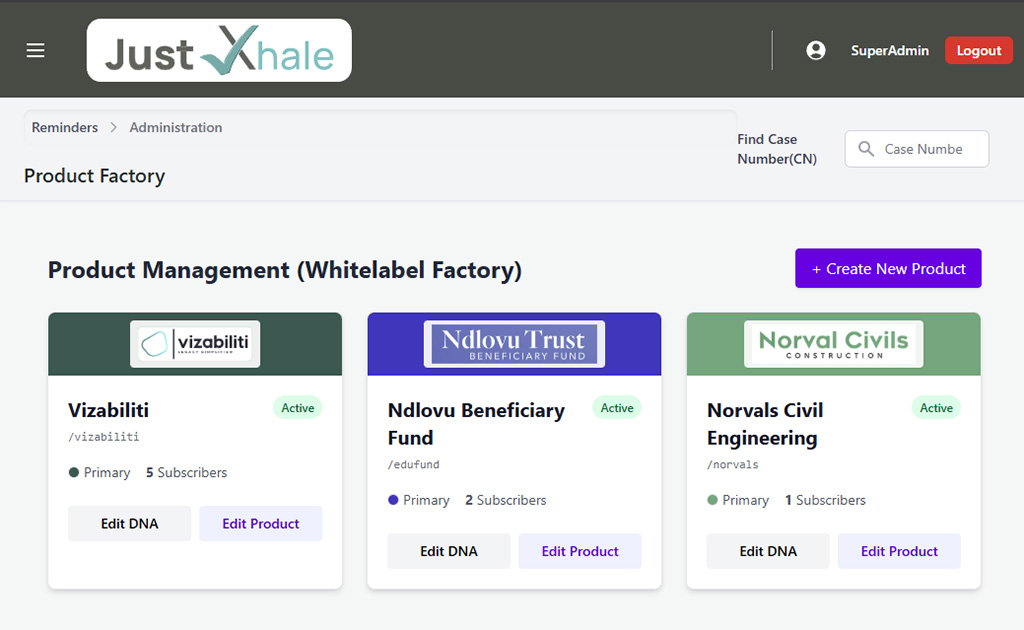
JustXhale was engineered to solve the “Admin Tax” that plagues South African professional firms. (Click to read more)
It isn’t just a storage hub – it is a Document Process Line designed to manage complex documentation lifecycles where you are dependent on external entities you don’t control.
It uses the Case File as the “unit of control“. By treating every case as a mini-project with its own milestones, the business moves from reactive searching to proactive management.
The traditional way of handling this employs several applications from spreadsheets, notes, word documents, email and calendars. Finding referenced documents on the run to handle enquiries, is a nightmare.
The real ‘Choke Point’ for South African professionals isn’t inside their office. It’s the friction of coordinating information from external sources (SARS, Banks, Municipalities, Clients). (Click to read more)
The Goal:
* Record admin steps on the fly: Track notes and reminders by user and date on all data entities for complete Case File Timeline Reporting.
* Move from “Folders” to “Stacks”: Replace nested, disorganized directories with lifecycle-based document stacks – the Case files.
* Eliminate the “Search Tax”: Ensure the professional spends their time on expertise, not hunting for the latest version of a file.
* Standardise the “Unit of Production”: Create a predictable cost-per-casefile model that can be billed as a disbursement.
* Eliminate the ‘Gatekeeper’ Risk: By setting file ownership to a Team rather than an individual, you remove the ‘single point of failure.’ Any trained user can grasp the context and progress of a file in seconds, ensuring the business doesn’t stall when someone is out of the office.
The Technical Blueprint: Built on the GrabTheWeb Zero-Deviation Framework, JustXhale provides a “Bank-Grade” foundation for any document-heavy workflow. (Click to read more)
The Architecture:
* Laravel 11 & Vue 3: A modern, decoupled engine for high-speed, app-like performance.
* PostgreSQL Reliability: Strict data integrity to ensure your “Production Units” are never corrupted.
* Multi-Layered Security: Token-based authentication and granular permissions that create absolute “Data Silos” between different subscribers.
* Local Sovereignty: Logic and Databases hosted at Teraco (South Africa) to ensure POPIA compliance and ZAR pricing stability.
* Architect-Led, AI-Assisted: We designed the business logic and data schema first. We then leveraged AI to rapidly build out the standardized components within that framework. This ensured we hit the 70% compression in development time without sacrificing a single industry-standard protocol.
* Maintainable Code: By sticking to DRY (Don’t Repeat Yourself) principles and layered API services, the system is not just a “black box”—it is a robust asset that any Laravel developer can maintain in the future.
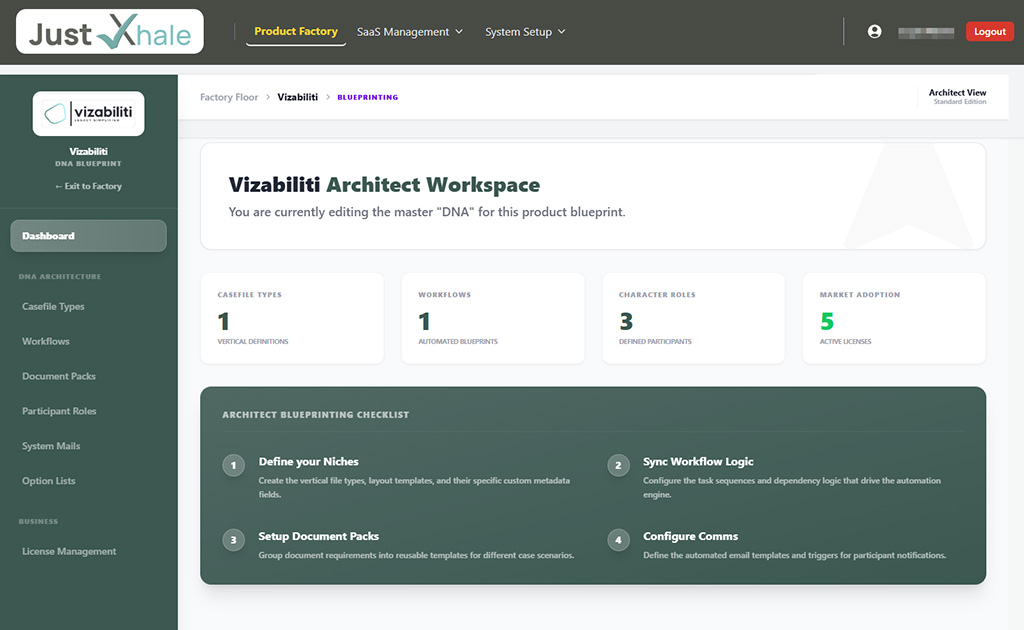
The Challenge: The Tax Practitioner’s role is a bewildering range of disjointed tasks. They have to coordinate document packs, manage strict SARS turnaround times and handle escalations across hundreds of active estates. (Click to read more)
The Pain Points:
* External Dependencies:** Relying on SARS and external attorneys who operate on their own timelines.
* Information Fragmentation: Using spreadsheets, notes, word docs and calendars to track a single case.
* Retrieval Nightmares: Finding a specific SARS reference or document “on the run” to handle an enquiry, was almost impossible.
* Wasted Headspace: Seconds and minutes lost daily to “context switching” and searching for status updates.
The Functional Mandate: The goal wasn’t just to “store documents”, but to coordinate the flow. The system had to be intuitive enough for a human to use under pressure while being robust enough to manage the logic of the law. (Click to read more)
The Requirements:
* Context-Sensitive Flow: A layout that focuses on the task at hand, limiting clicks and preventing “admin wastage.”
* Team & Silo Security: Robust privacy between different Tax Practitioner firms (subscribers) and even between internal teams.
* Resource Agility: The ability to move estates between teams or reallocate staff to different teams as pressure spikes.
* Precision Tracking: Capturing precise target dates, SARS Case References, and audit trails for every interaction.
* SLA Reporting: Automated reporting to Executors and Attorneys to prove performance and manage expectations.
Cost-Effective Delivery: Days, not Months: By deploying Vizabiliti as a product on the JustXhale engine, we eliminated 70% of the traditional development cycle. (Click to read more)
The Implementation Reality: Rather than building a SARS-tax solution from scratch—which would have involved months of manual coding and architectural risk – we set Vizabiliti up as a specialized Product on the existing JustXhale PaaS.
* Pre-built Plumbing: Because the “Engine” (JustXhale) already handled the document stacks, security silos and audit trails, we didn’t have to write a single line of code for the foundation. We simply configured the niche business rules for Deceased Estate Tax. The only aspect that needed some thinking was configuring the workflow sequence as it required a new way of thinking about their processes . Due to this being setup only, it will be refined over time.
* Rapid Deployment: This reduced the take-on process to just a few days. We moved straight to solving the business problem without getting bogged down in “building the house” before we could “arrange the furniture.”
* Commercial Reusability: Because this was built as a product on a standardized PaaS, it is inherently scalable. Since South African Tax Practitioners all operate under the same legal procedures and SARS mandates, Vizabiliti can be resold across the entire sector as a “Plug-and-Play” compliance tool.
The Result: The professional gets a world-class, bespoke-feeling tool at a fraction of the cost of custom development, the JustXhale Platform Providers ensures the product is built on a foundation that is 100% stable and maintainable.